

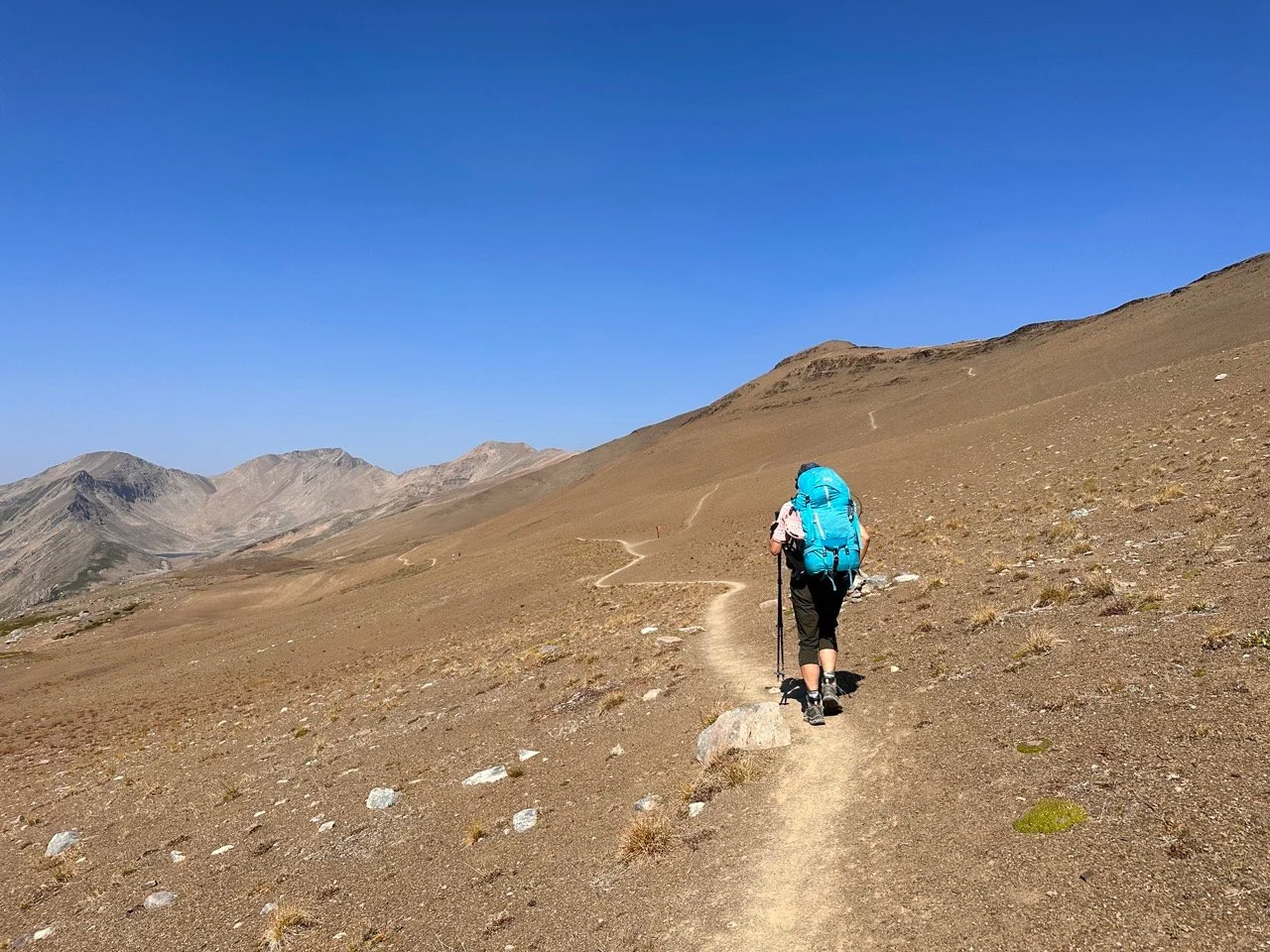
The Skyline Trail is one of the most popular backpacking trips in Jasper National Park. And it’s easy to see why – it’s 44 km of spectacular mountain scenery including 25 km above the treeline. I hiked the trail over 3 days in late August and was amazed by its beauty.
I’m a hiking guidebook author and have backpacked all over BC and the Canadian Rockies. So far the Skyline Trail is tied with the Rockwall Trail as one the most spectacular multi-day mountain backpacking trip I’ve done.
My guide to the Skyline Trail in Jasper National Park includes:
- Quick facts about the Skyline Trail including distance, location, how long it takes, and more
- Skyline Trail map and elevation profile with all the key locations marked
- How to get to the Skyline Trail including info about parking and shuttles
- Skyline Trail reservations: key dates plus booking tips
- How much does it cost to hike the Skyline Trail? My detailed budget breakdown
- Detailed trail description, broken down into sections including details for each campground
- Skyline Trail itinerary options from 2-4 days
- Skyline Trail hiking tips: advice for bears, toilets, weather, and more
This is a sensitive wilderness area. Learn how to Leave No Trace to keep the wilderness wild. Make sure you are prepared by bringing the 10 Essentials. Get ready for adventure with this checklist of things to do before every hike.
Hey there: Some of the links in this post are affiliate links, which means I earn a small commission at no cost to you. Thanks for your support. -Taryn
Skyline Trail Quick Facts
Description: The Skyline Trail is a spectacular hike through the mountains in Jasper National Park. Most of the hike is above the treeline and you cross three mountain passes. There are six backcountry campgrounds and one backcountry lodge along the route.
Location: The Skyline Trail is located in the Rocky Mountains in Canada’s Jasper National Park. The trail runs thought the mountains from Maligne Lake to Signal Mountain Trailhead on Maligne Lake Road near Maligne Canyon.
Distance: 44 km one-way
Elevation Gain: 800-1330m depending on which direction you hike
Difficulty: Moderate. There is one steep and challenging section but the rest of the trail is quite mellow.
How long does it take to hike the Skyline Trail? 2-4 days. Most people will take 3 days. See the itinerary section for more info.
Best time to hike the Skyline Trail: Mid-July to mid-September. The trail is too snowy the rest of the time.
Skyline Trail Weather: The Skyline Trail is the highest trail in Jasper National Park. Most of the trail is above 2000m. In July and August, the average high temperature is 22°C and the average low is 7°C. Thunderstorms in the afternoon are common. Use my picks for the Best Weather Apps for Hiking to see the forecast for your trip.
Skyline Trail Reservations and Costs: You must make reservations to hike the Skyline. It costs about $110.50 per person to hike the trail (including National Park entry fees, backcountry camping fees, a reservation fee, and a shuttle fee). But you can save money by going in a group, hiking faster, or driving yourself. More details are in the reservations and costs sections below.
What to Bring on the Skyline Trail: This is a remote hiking trip, so you will need to bring typical backpacking gear. Use my backpacking checklist to make sure you have everything you need.
Wildlife on the Skyline Trail: The trail is in bear country (both black bears and grizzly bears). Carry bear spray, hike in a group, and make noise, especially in brushy areas. Use campground cooking areas and store all your food in toiletries in bear lockers. Read my bear safety tips for backpackers for more info.
Skyline Trail Rules: Dogs, fires, drones and hammocks are not allowed.
Indigenous Context: The Skyline Trail is in the traditional territory of the Anishinabe, Aseniwuche Winewak, Dene-zaa, Nêhiyawak, Secwépemc, Stoney Nakoda, Mountain Métis and Métis. The government forced Indigenous people to leave when Jasper National Park was created in 1907 and prohibited from accessing their traditional territory to hunt, fish, gather, and conduct cultural practices.