
January 2020

Hike to Crooked Falls in Squamish

When you think of waterfalls in Squamish, you think of Shannon Falls or maybe Brandywine Falls. Those are both amazingly tall waterfalls with easy tourist-in-flipflops-friendly walks to a viewing platform, overflowing parking lots and tons of people with selfie sticks.. But what if I told you there were other awesome waterfalls in Squamish that you could actually hike to, then have them all to yourself? Welcome to Crooked Falls in Squamish!

This waterfall is interesting because… well it’s crooked, like the name. In cascades down the Sigurd Creek directly into a rock bluff, where it makes a sharp 90 degree turn before flowing downhill.  And you get to stand on the rock bluff! (I shot the video from there.) It’s a bit of a drive to get there, but the hike isn’t too difficult and the views are certainly worth it.

Driving Directions to Crooked Falls

Click for full driving directions from Vancouver . (But if you do use these directions, be aware that you will lose cell service outside Squamish so you’ll need an off-line version of the map).

Drive highway 99 to Squamish. North of Squamish turn west (left) on to Squamish Valley road – this is the same intersection as the entrance to Alice Lake Provincial Park, but you want the road on the other side of the highway.  Follow this road to a bridge over the Cheakamus River. Immediately after the bridge the road forks – go left to stay on the Squamish Valley road. The road has speed bumps as it passes through the Cheakamus Indian Reserve. Follow this road for about 19km past some homes and ranches to the end of the pavement.

Past here you will be on the Squamish Forest Service Road, which is gravel and can be dusty, but any 2WD drive car can make it to the trailhead. About 1km after the road turns to gravel, watch for a big bridge on your left – it may be signed Ashlu Main Forest Service Road or Squamish Riverside Campground. Turn left to cross the big bridge, go past the campground (on your right), then cross another smaller bridge. Stay on the main Ashlu road for another 2km or so, then cross two smaller bridges over the Ashlu river. Right after the second bridge, park your car. The overgrown logging road heading uphill on the lefthand side of the road is the trailhead (and it has a sign that says Sigurd Trail).
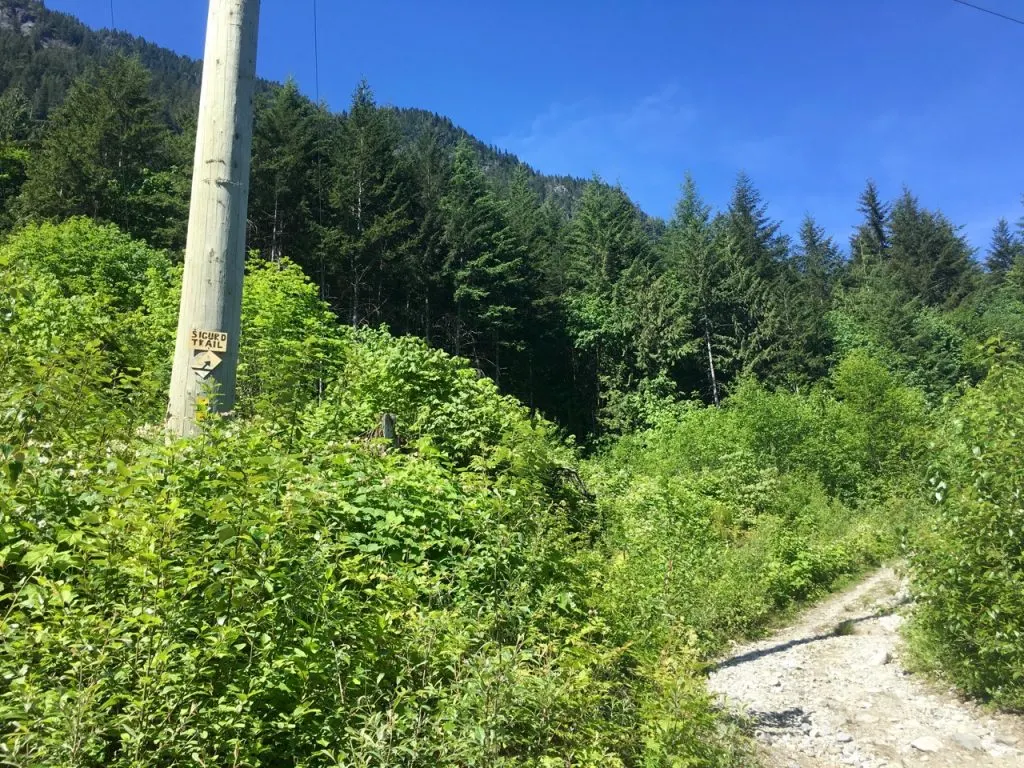
Sigurd Creek Trailhead - Crooked Falls
Sigurd Creek Trailhead

Crooked Falls Hike

Distance: 7km round trip

Elevation gain: About 400m

Hikeable all year round since maximum elevation is around 500m so you are unlikely to encounter snow in the winter.  Best in the spring if you want to see the falls at maximum flow.

The BCMC (British Columbia Mountaineering Club) built and maintains the trail as it accesses some mountaineering and scrambling objectives higher up the mountain. The trail is well-built and well marked with orange squares so it is easy to follow. From the trailhead where you parked your car walk about 15 minutes uphill on the old road. At a switchback where the road curves right, look for a trail heading left with a “Sigurd Trail” sign.
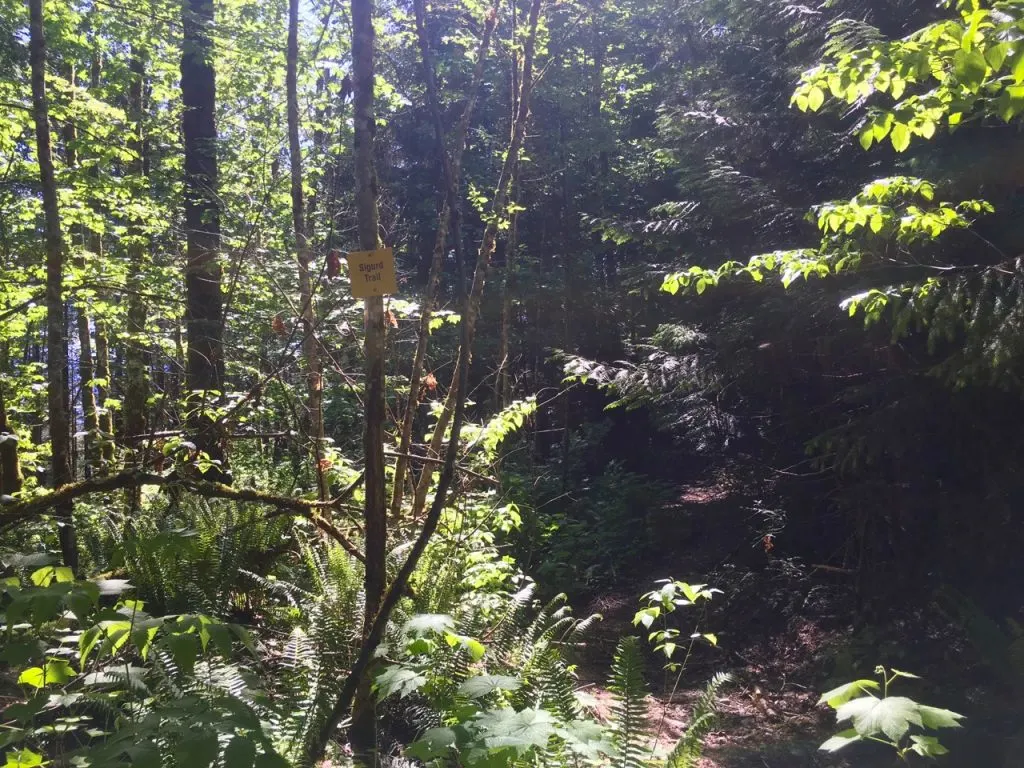
Sigurd Trail sign - Crooked Falls
Sign marking the left turn off the old road

At this point you are on a narrow trail that sometimes widens up enough for you to tell that you are on another, even older road. You’ll pass below a huge rock wall covered in dripping moss and get glimpses of the Squamish valley through the trees. After a few hundred meters you’ll pass another trail sign indicating that the trail heads sharply up the hill.
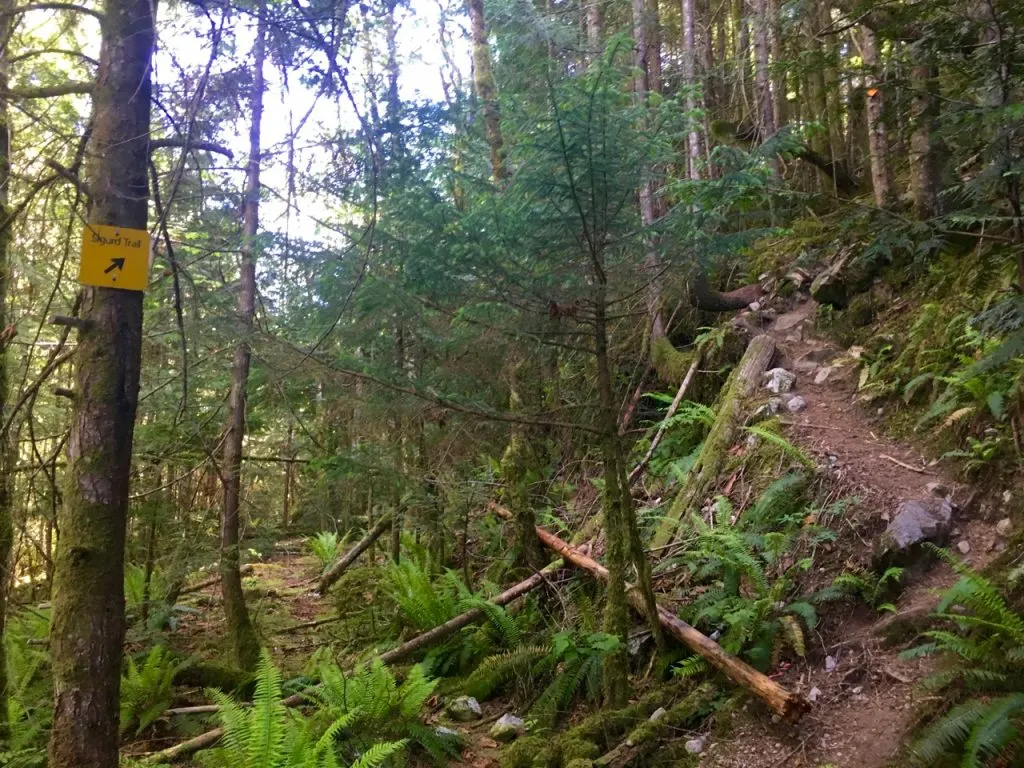
Sigurd Creek Trail - Crooked Falls
Trail sign points uphill – the climbing starts here

The trail climbs steeply uphill for a few minutes before popping out on a rocky bluff with a great view of the Squamish River valley.
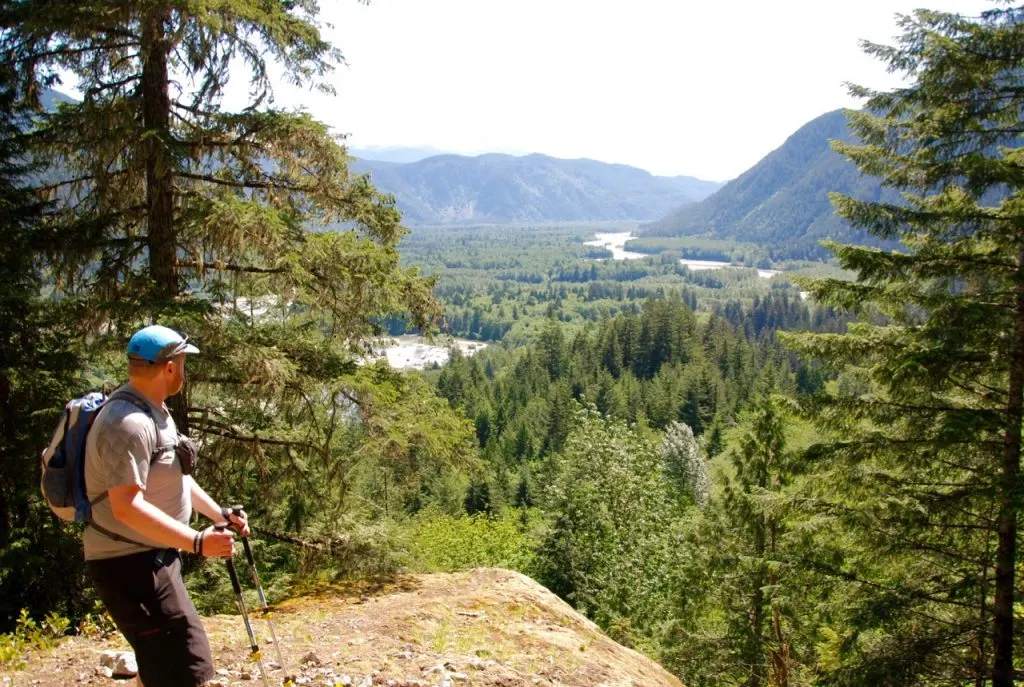
Squamish River Valley from the hike to Crooked Falls
The view of the Squamish River Valley

Past the viewpoint the trail climbs steeply with a few breaks and passes lots of mossy rock walls, a giant boulder and a few patches of more mellow forest.
Sigurd Creek Trail - Crooked Falls
Trail sign points uphill – the climbing starts here

The trail climbs steeply uphill for a few minutes before popping out on a rocky bluff with a great view of the Squamish River valley.

Squamish River Valley from the hike to Crooked Falls
The view of the Squamish River Valley

Past the viewpoint the trail climbs steeply with a few breaks and passes lots of mossy rock walls, a giant boulder and a few patches of more mellow forest.

Hike the Skyline Trail in Jasper National Park

The Skyline Trail is one of the most popular backpacking trips in Jasper National Park. And it’s easy to see why – it’s 44 km of spectacular mountain scenery including 25 km above the treeline. I hiked the trail over 3 days in late August and was amazed by its beauty.

I’m a hiking guidebook author and have backpacked all over BC and the Canadian Rockies. So far the Skyline Trail is tied with the Rockwall Trail as one the most spectacular multi-day mountain backpacking trip I’ve done.

My guide to the Skyline Trail in Jasper National Park includes:

This is a sensitive wilderness area. Learn how to Leave No Trace to keep the wilderness wild. Make sure you are prepared by bringing the 10 Essentials. Get ready for adventure with this checklist of things to do before every hike.

Hey there: Some of the links in this post are affiliate links, which means I earn a small commission at no cost to you. Thanks for your support. -Taryn

Skyline Trail Quick Facts

Description: The Skyline Trail is a spectacular hike through the mountains in Jasper National Park. Most of the hike is above the treeline and you cross three mountain passes. There are six backcountry campgrounds and one backcountry lodge along the route.

Location: The Skyline Trail is located in the Rocky Mountains in Canada’s Jasper National Park. The trail runs thought the mountains from Maligne Lake to Signal Mountain Trailhead on Maligne Lake Road near Maligne Canyon.

Distance: 44 km one-way

Elevation Gain: 800-1330m depending on which direction you hike

Difficulty: Moderate. There is one steep and challenging section but the rest of the trail is quite mellow.

How long does it take to hike the Skyline Trail? 2-4 days. Most people will take 3 days. See the itinerary section for more info.

Best time to hike the Skyline Trail: Mid-July to mid-September. The trail is too snowy the rest of the time.

Skyline Trail Weather: The Skyline Trail is the highest trail in Jasper National Park. Most of the trail is above 2000m. In July and August, the average high temperature is 22°C and the average low is 7°C. Thunderstorms in the afternoon are common. Use my picks for the Best Weather Apps for Hiking to see the forecast for your trip.

Skyline Trail Reservations and Costs: You must make reservations to hike the Skyline. It costs about $110.50 per person to hike the trail (including National Park entry fees, backcountry camping fees, a reservation fee, and a shuttle fee). But you can save money by going in a group, hiking faster, or driving yourself. More details are in the reservations and costs sections below.

What to Bring on the Skyline Trail: This is a remote hiking trip, so you will need to bring typical backpacking gear. Use my backpacking checklist to make sure you have everything you need.

Wildlife on the Skyline Trail: The trail is in bear country (both black bears and grizzly bears). Carry bear spray, hike in a group, and make noise, especially in brushy areas. Use campground cooking areas and store all your food in toiletries in bear lockers. Read my bear safety tips for backpackers for more info.

Skyline Trail Rules: Dogs, fires, drones and hammocks are not allowed.

Indigenous Context: The Skyline Trail is in the traditional territory of the Anishinabe, Aseniwuche Winewak, Dene-zaa, Nêhiyawak, Secwépemc, Stoney Nakoda, Mountain Métis and Métis. The government forced Indigenous people to leave when Jasper National Park was created in 1907 and prohibited from accessing their traditional territory to hunt, fish, gather, and conduct cultural practices.

How to Hike and Camp at Toleak Point in Olympic National Park

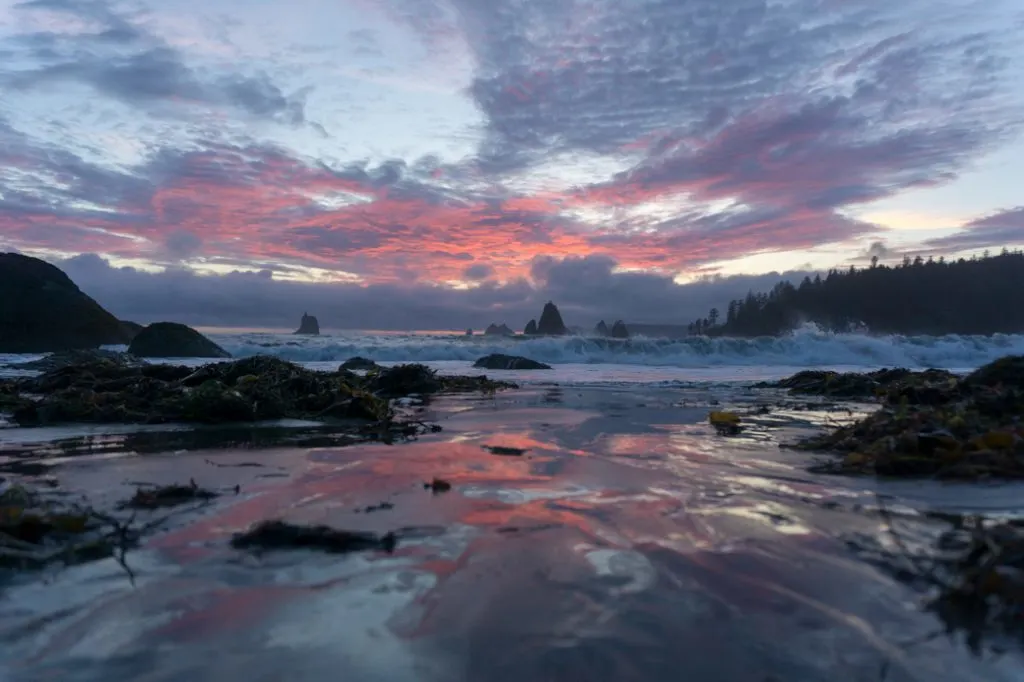
If you’re looking to explore some of Olympic National Park’s rugged coastline, I recommend hiking to Toleak Point from Third Beach. It’s a moderately challenging trail that travels along beaches and across steep headlands. The area around Toleak Point is dotted with dozens of offshore islands and sea stacks, making it really picturesque. Plus there are ah-mazing sunsets! You can hike there and back in a full day, but I think you should make it a backpacking trip and stay the night. The Toleak Point area isn’t as popular as the easier Ozette Loop or Shi Shi Beach hikes, which means you’ll experience more solitude.

However, you will have to work a bit harder for that solitude by climbing up ropes and carefully planning for the tides. I’ve done quite a few trips to the Olympic Coast so far, and I think Toleak might just be my favourite. There’s enough challenging terrain to make it a bit of an adventure, without it being too hard to be enjoyable. And the scenery… oh the scenery. If you are planning your own hiking or camping trip to Toleak Point, I’ve got all the info you need to make your trip incredible.

Hey there: Some of the links in this post are affiliate links, which means I earn a small commission at no extra cost to you if you make a purchase. Thanks for supporting my website! -Taryn

Third Beach to Toleak Point Hike Basics

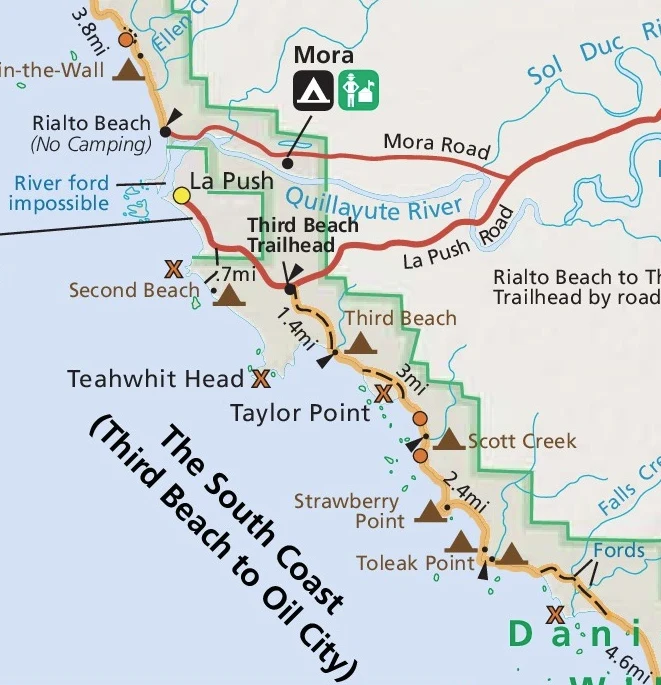
Map of the hike from Third Beach to Toleak Point in Olympic National Park.
You’ll hike from the Third Beach trailhead to Toleak Point.

Pronunciation: It’s “toe-lee-ack”. If you say “too-leek” the Rangers will giggle.

Third Beach to Toleak Point Hike Basics

Map of the hike from Third Beach to Toleak Point in Olympic National Park.
You’ll hike from the Third Beach trailhead to Toleak Point.

Pronunciation: It’s “toe-lee-ack”. If you say “too-leek” the Rangers will giggle.Indigenous Land: This route is on the traditional territories of the Quileute and Hob people’s. Toleak means “hole in the rock” in the Quileute language and is likely a reference to the large window in the sea stack just north of Toleak Point.

Distance: 6.5 miles (10.5km) one way

Difficulty: Moderate. There are some challenging ladders and rope-assisted bluffs to climb.

Time: Depends on the tides. One overnight or at least 3.5 hours each way.

What to Bring: Everything you need to be self-sufficient. Use my simple backpacking checklist to ensure you have the gear you need.

Permits: Olympic National Park pass required. Overnight visitors require a camping permit.

Tide Info: La Push Tide Table. You will want to look into the tides when planning your trip as they can make a BIG difference.

Sunset at Toleak Point in Olympic National Park

Toleak Point is on the coast in Olympic National Park. It’s actually part way along the South Coast Wilderness Trail, which is a longer and more difficult route from La Push in the north to Oil City in the south. The scenery on the northern section up to Toleak Point is just SO good. I think it’s worth heading into Toleak Point for a day trip or an overnight backpacking trip.

Toleak Point is on the coast in Olympic National Park. It’s actually part way along the South Coast Wilderness Trail, which is a longer and more difficult route from La Push in the north to Oil City in the south. The scenery on the northern section up to Toleak Point is just SO good. I think it’s worth heading into Toleak Point for a day trip or an overnight backpacking trip.